Feeding line
Reception hopper, transfer pumps, dosing and feedstock-specific preparation.
A complete plant approach for livestock manure, food waste and suitable organic by-products, from feedstock reception to gas utilisation.
A biogas plant is a coordinated system of feedstock, biology and energy use. BİOPAC starts the design process with waste characteristics and the needs of the operation.
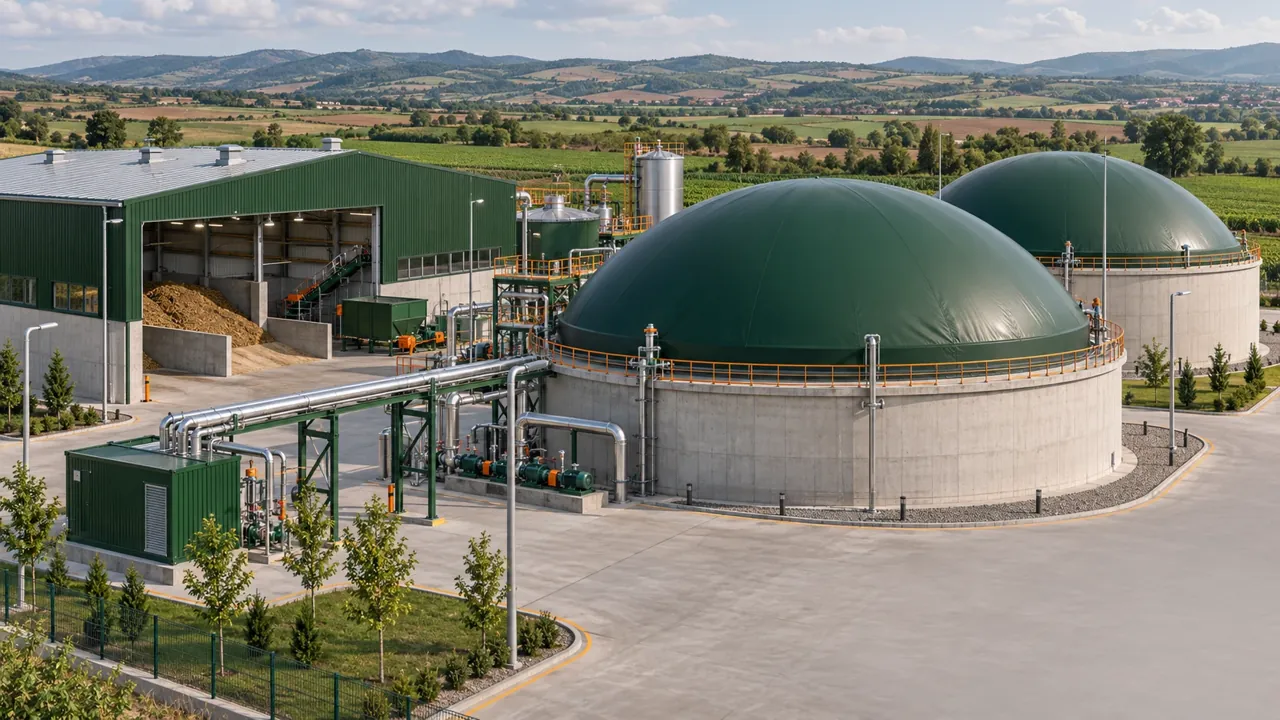

Biogas plant concept integrating digestion, gas storage and site infrastructure.
Source separation, foreign material control, size reduction and homogenisation.
Microbial conversion of organic matter into biogas in an oxygen-free environment.
Moisture and H₂S control, gas storage and preparation for downstream equipment.
Heat, suitable energy equipment or a biomethane line; digestate management.
Equipment and process options are selected according to project inputs and target outputs.
Reception hopper, transfer pumps, dosing and feedstock-specific preparation.
Reactor design coordinated with mixing, heating and process monitoring.
Gas storage, condensate drainage, gas analysis and safety equipment.
Automation for monitoring temperature, pH, feeding and gas production.
| Feedstock | Type, daily quantity, dry matter and organic matter content |
|---|---|
| Biological suitability | BMP potential, inhibitors and seasonal variation |
| Site | Space, infrastructure, access and surroundings |
| Energy objective | Gas use for cooking, hot water, heat or other applications |
Gas production and energy output are determined by feedstock analysis and project design.
It can be considered with suitable gas cleaning, pressure control and biogas-compatible burners. Existing natural-gas appliances require a separate suitability and conversion assessment.
No. Production depends on composition and biodegradability. Capacity assessment uses representative sample analysis and BMP testing.
Further reading: EPA AgSTAR · System design ↗
Share your available data so we can define system boundaries and scope together.