Heating & distribution
Heat exchangers, hot-water circuits, pump sets and heat distribution arrangements.

A greenhouse climate approach that considers temperature, humidity, air movement and heat supply together.
Greenhouse performance depends on managing the balance between crop needs and external conditions. Heating, ventilation, cooling and automation are designed around the crop, greenhouse geometry and local climate data.
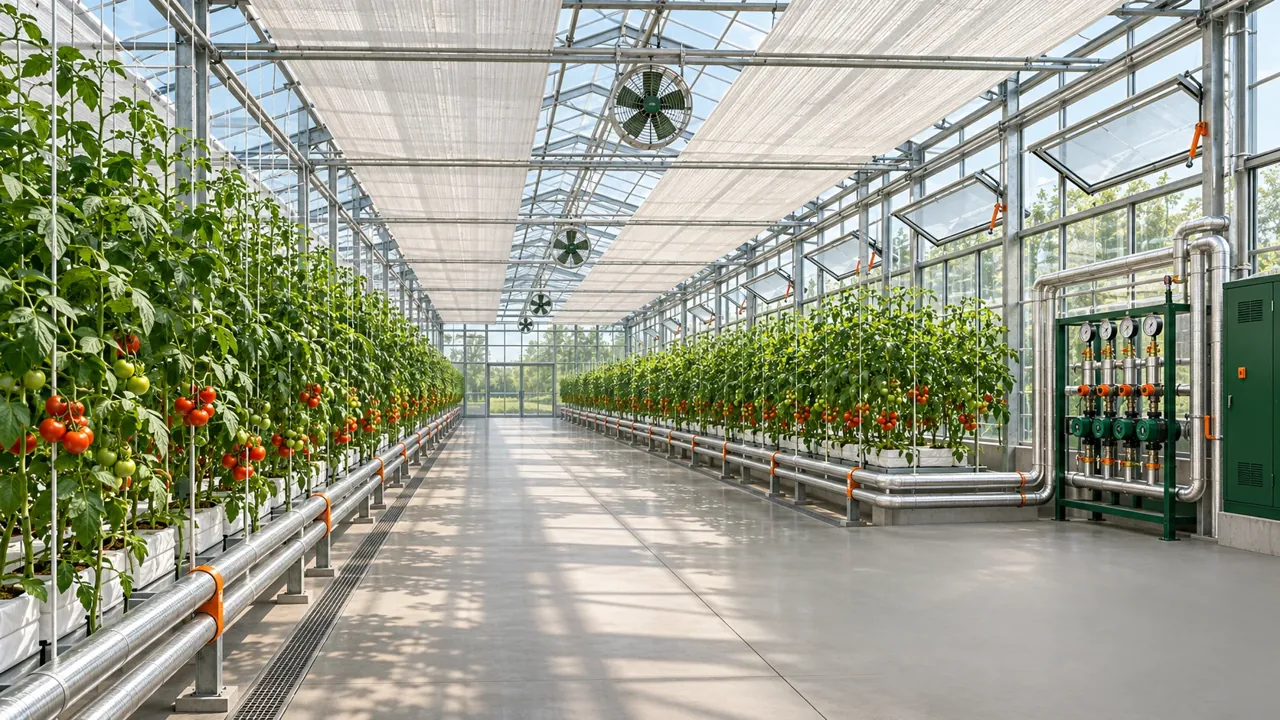

Greenhouse concept integrating heat distribution, air movement and climate control.
Defining site climate, production calendar, crop and target indoor conditions.
Assessing heating and cooling requirements together with the greenhouse structure.
Matching heat distribution, ventilation, humidity and control equipment.
Tracking climate conditions through sensor data and adjusting control scenarios.
Equipment and process options are selected according to project inputs and target outputs.
Heat exchangers, hot-water circuits, pump sets and heat distribution arrangements.
Natural/mechanical ventilation and climate-appropriate cooling options.
Indoor air circulation, humidity monitoring and crop-specific management.
Control based on temperature, relative humidity and outdoor conditions; screen integration where appropriate.
| Greenhouse structure | Area, height, covering and heat loss characteristics |
|---|---|
| Production | Crop, cultivation method and seasonal schedule |
| Climate | Outdoor temperature, humidity, wind and solar exposure |
| Heat source | Available heat output, temperature level and seasonal availability |
Energy requirements and growing conditions are determined using crop and local climate data.
Available heat quantity and temperature are matched with seasonal greenhouse demand. Heat exchangers, distance, distribution losses and backup heating are assessed.
Greenhouse CO₂ use requires a separate gas quality and safety assessment. Direct use of raw biogas or untreated exhaust is not part of this design approach.
Further reading: FAO · Greenhouse climate control ↗
Share your available data so we can define system boundaries and scope together.