Separation & reception
Separate collection of food and kitchen waste, with removal of packaging and foreign materials.
Recover value from food and kitchen waste with a compact biogas system. With suitable equipment, use the gas for cooking, hot water and heating.
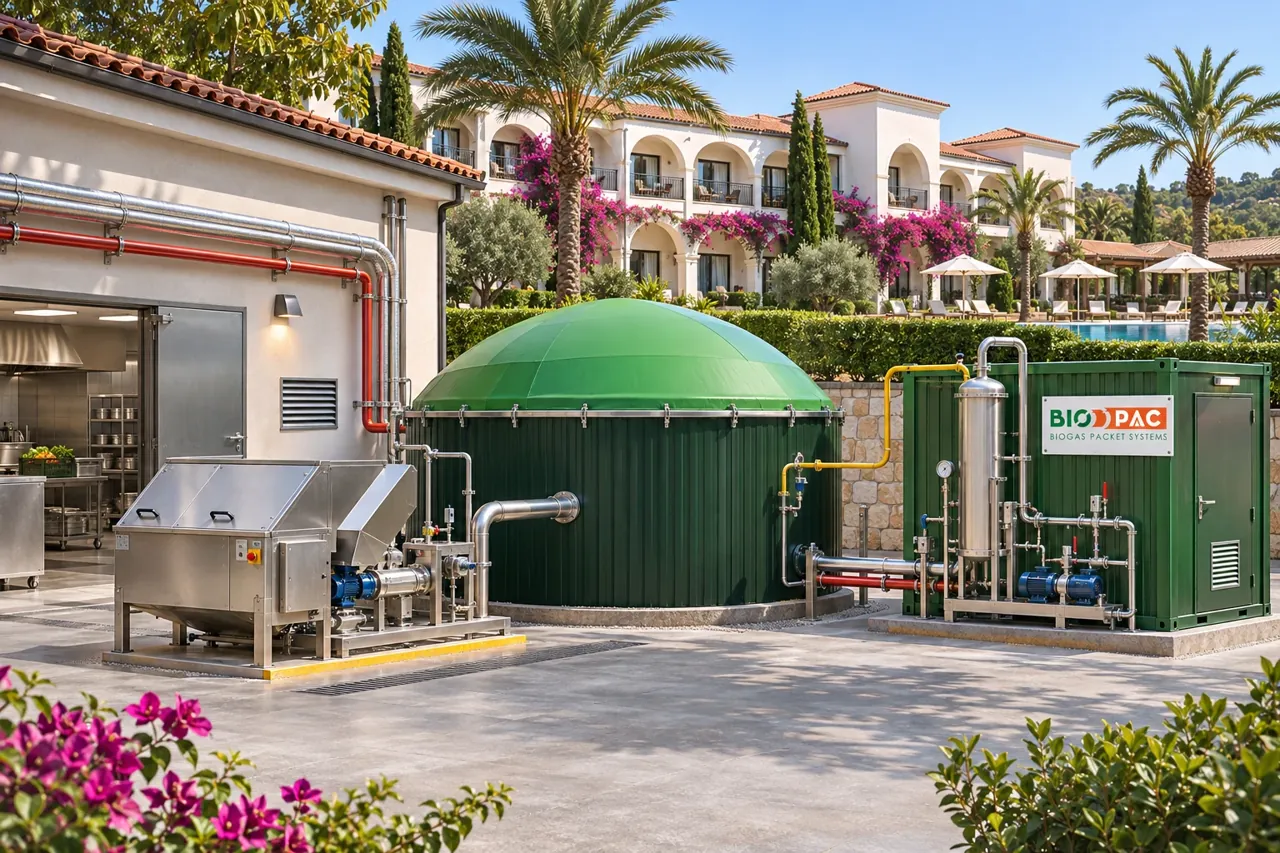
Source-separated organic waste can become an energy resource managed on your hotel site. BİOPAC assesses waste quantity, seasonal occupancy, site conditions and gas consumption together to develop a project-specific system.
Separate collection of food and kitchen waste, with removal of packaging and foreign materials.
Biogas production in an anaerobic environment after size reduction, homogenisation and controlled feeding.
Integration of H₂S and moisture control, gas storage, pressure regulation and safety equipment.
Assessment of cooking, hot water and heating applications with biogas-compatible burners.
| Your waste profile | Share daily separated food waste quantities, operating months and changes in waste supply with occupancy. |
|---|---|
| Your gas use | Review kitchen, hot water and heating demand together. Focus the assessment on gas production and on-site use at the hotel. |
| Site and operating scope | Define waste reception, plant layout, gas-use locations and digestate management before preparing the proposal. |
Share your available information so we can determine capacity and scope together.
| Waste quantity | Daily collectable food waste and seasonal variation. |
|---|---|
| Energy demand | Kitchen gas consumption, hot water and heating profiles. |
| Site & infrastructure | Service area, waste reception, pipe routes and odour control. |
| Output management | Digestate analysis, storage and utilisation planning. |
Feedstock suitability is assessed separately. Packaging, plastics, metal and other foreign materials must be removed; waste composition and analysis determine the design.
Biogas compatibility is not assumed. Boiler and kitchen appliance requirements, burner conversion, pressure and gas safety are assessed for each project.
Waste weighing, representative sample analysis and actual hotel gas consumption are used. Seasonal alignment between production and consumption is an important part of feasibility.
Establish actual waste quantities, analyses, usable gas and hotel consumption first. A project-specific calculation then considers investment, operating expenses and current energy costs; no fixed payback period is assumed.
Share the season length, low- and high-occupancy periods and the associated waste and consumption data. We can then assess the system scope alongside the annual operating plan.
Share your existing conditions and objectives for a hotel biogas project.